
6 Best project44 Alternatives in 2026 - Ranked by Freight Type and Region
Five of them are visibility platforms. The first is for the mid-market shipper who, under the hood, is still running the operation in Excel and email — and needs a system that covers the whole transport lifecycle, not another layer on top.


Bring structure, visibility, and compliance to your transport operations


Summary
project44 is one of the strongest real-time visibility platforms on the market, and most teams searching for an alternative want another visibility platform — the right one comes down to region, mode, and freight type. But a visibility layer only tracks shipments and predicts arrivals on top of the systems you already run; it doesn't plan a transport, allocate it, handle the documents, or validate the invoice. This guide ranks six alternatives across two groups: five standalone visibility platforms (FourKites, Shippeo, Descartes MacroPoint, Tive, GoComet), and one full-lifecycle TMS — Deliwell — for the mid-market EU shipper who needs to run the operation, not just see it.
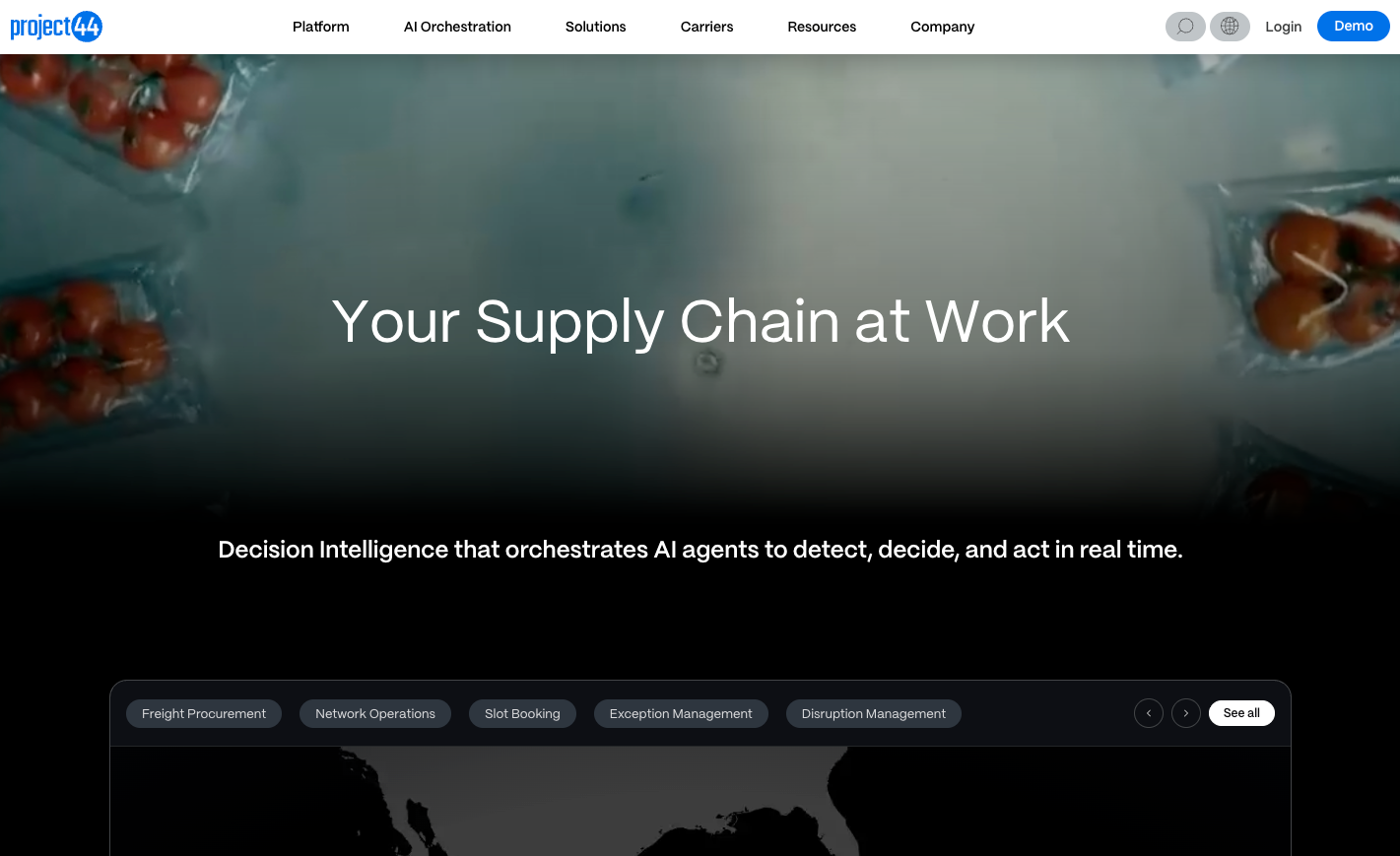
Project44 is one of the strongest real-time visibility platforms on the market. Its Movement platform turns fragmented carrier feeds into live ETAs and delay alerts across ocean, air, rail, road, and parcel, backed by one of the largest tracking networks in the industry, with over 1,400 telematics integrations. For an enterprise that needs deep, global, multimodal tracking, it's a serious tool.
However, people look for alternatives for a few reasons. Some want stronger coverage in a specific region or mode. Some find the enterprise depth heavy to onboard and want something lighter. Some are mid-market teams paying for more platform than they use. And some realize, after buying visibility, that knowing where a problem is doesn't fix the operation that created it.
Before you compare anything, get clear on what you actually need. Project44 is a visibility layer: it tracks shipments and predicts arrivals on top of the systems you already run. It doesn't plan a transport, allocate it, handle the documents, or validate the invoice. Five of the tools below are visibility platforms, the like-for-like answer if tracking is the job. The first is for a different user: the mid-market shipper who, under the hood, is still running the operation in Excel and email and needs a system that covers the whole transport lifecycle rather than another layer on top.
TL;DR: Which project44 alternative fits you?
For shippers who need to run the operation, not just track it:
- Deliwell: best for mid-sized EU shippers who need a full transport management system that covers the entire lifecycle, from order to invoice, with built-in tracking and native compliance. Book a free demo call with the Deliwell team.
For teams that need a standalone visibility platform:
- FourKites: for enterprises that want the deepest predictive analytics and multimodal tracking.
- Shippeo: for European shippers, especially automotive, needing strong regional coverage.
- Descartes MacroPoint: for North American truckload visibility and freight brokers.
- Tive: for high-value or condition-sensitive freight that needs IoT sensor tracking.
- GoComet: for mid-market teams that want visibility bundled with freight automation at a lower cost.
Side-by-side comparison
Why companies look for project44 alternatives
project44 rarely loses on tracking capability. The pressure comes from coverage, cost, and category fit:
- Coverage gaps — No visibility platform covers every carrier in every region. A team with heavy volume on a particular mode or in a particular market sometimes finds a regional specialist tracks more of its freight than a global generalist does.
- Enterprise weight — project44's depth comes with a comprehensive interface and an onboarding process to match. The platform's power requires real implementation and training effort, which is a lot for a smaller team to carry.
- Category fit — This is the one worth sitting with. project44 is a visibility layer: it tells you where a shipment is and when it will arrive. It doesn't plan the shipment, allocate it, handle the documents, or reconcile the invoice. For a mid-sized shipper whose purchasing, sales, warehouse, finance, and dispatch teams still coordinate over Excel, email, and WhatsApp underneath the tracking, visibility surfaces the problem without fixing the process that caused it.
That last point sets up a fork. Some people searching for a project44 alternative don't need a different tracker — they need to stop running transport manually, and tracking is only the symptom that made the gap visible. The first tool below is for them.
How we evaluated project44 alternatives
We used four criteria:
- scope - pure visibility, or visibility tied to a full operation
- coverage - modes, regions, and carrier network depth
- buyer fit - enterprise, mid-market, or broker
- time to value.
The conclusions in this article draw on public reviews from Gartner, G2, and Capterra, vendor documentation, and recent market analysis.
Deliwell: the project44 alternative for shippers who need the whole operation

What does Deliwell do? Mid-sized shippers typically manage transports with emails, Excel, and phone calls, while enterprise platforms like project44, Transporeon, and CargoWise are too expensive and too complex for them.
Buying a visibility layer on top of that doesn't close the gap, because tracking only shows you the problem without fixing the underlying manual operation.
Deliwell is a transportation management system built for mid-sized shippers that covers the full transport lifecycle from order to invoice: planning, allocation, a carrier portal, tracking, e-CMR, native RO e-Transport compliance, invoice validation, and reporting.
Deliwell's strengths — Unlike visibility-only tools, it covers the whole lifecycle, so tracking sits next to the planning, documents, and finance it relates to. It's built for mid-sized adoption, with an intuitive interface, minimal training, and a go-live measured in weeks rather than months, and it connects sales, warehouse, finance, and dispatch on the same data instead of leaving logistics on an island.
RO e-Transport and e-CMR are generated automatically, and compliance updates are maintained within the subscription. Invoice validation checks every shipment against the contracted rate, and the structure cuts manual work by 30 to 50%.
The operational data drives real savings: Hamilton reduced transport costs from 3.5% to 2.5% of goods' value, and Inteva recovered €74,000 per year on a single route. Where a group is mandated to run project44 for visibility, Deliwell integrates directly with it, so the two coexist under the TMS.
Deliwell's Shortcomings — It's built for mid-sized shippers running primarily road freight (FTL, LTL), so it's the wrong fit for very small operations under 50 shipments a month, for enterprises with five or more GPS providers, and for complex air and sea freight costing, which it supports only on an all-in basis. It's EU-focused, with Romania and Eastern Europe as its home market, so its tracking serves that operational scope rather than standalone global visibility.
Deliwell's Pricing — s fixed, starting at €250/month and scaling with your transport volume — delivered as an all-in-one SaaS subscription with no hidden IT costs.
Best for - Mid-sized EU shippers, often a Romanian entity of a larger group, that need a full transport management system rather than a standalone visibility layer on top of a manual operation. Book a free demo call with the Deliwell team.
FourKites: the best project44 alternative for predictive analytics at enterprise scale
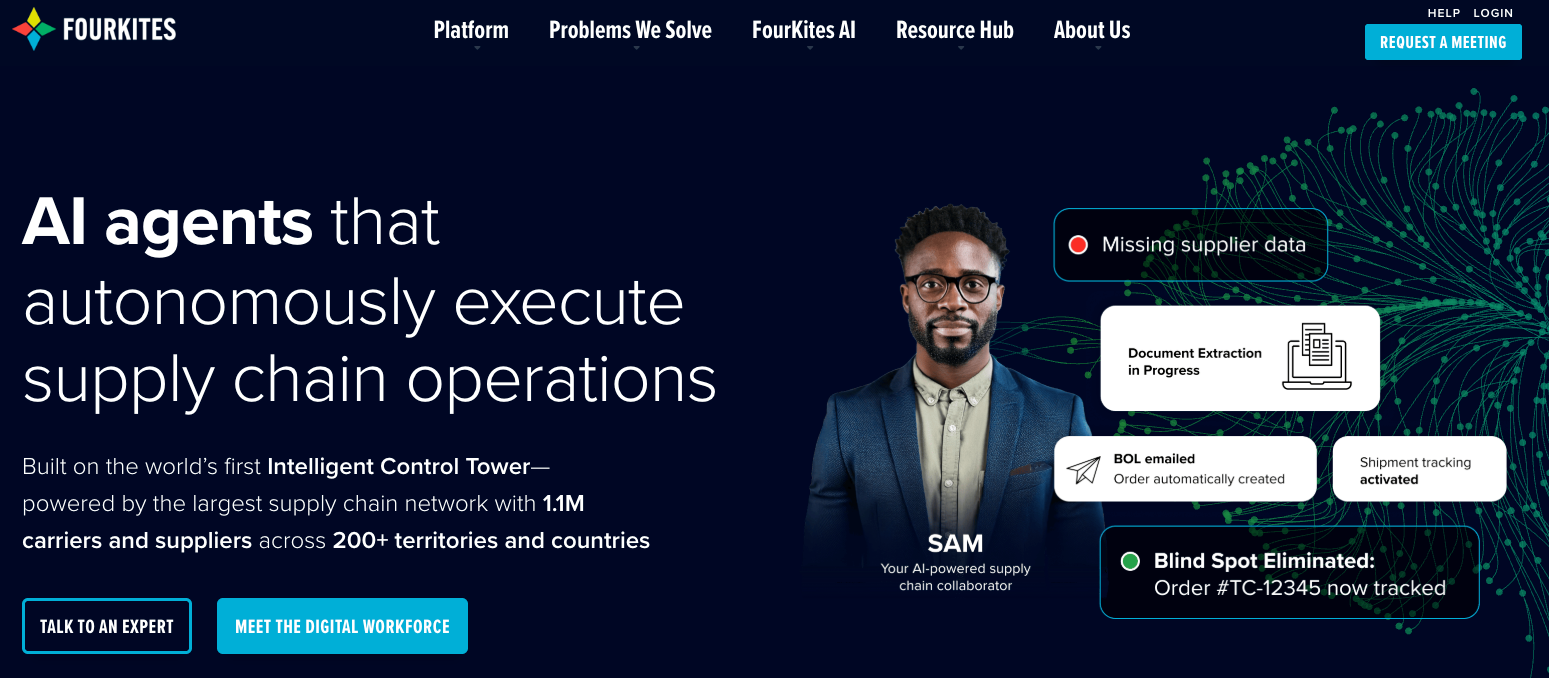
What does FourKites do? - A global supply chain visibility platform delivering real-time tracking and predictive ETAs across road, rail, ocean, and air, with end-to-end tracking and automated exception management on one platform for shippers, carriers, and partners.
FourKites's Strengths - Its predictive analytics are the standout, with ETAs praised for accuracy and a model that weighs a wide range of factors to anticipate delays before they hit. It carries a large enterprise technology ecosystem across ERP, TMS, and WMS, and it's a consistent leader alongside project44 in the visibility category.
FourKites' Shortcomings - The depth brings a moderate learning curve and meaningful integration resources, so the total cost of ownership runs high. It's an enterprise tool, so a smaller team may find it more than the job needs.
FourKites' Pricing - Enterprise quote, scaled to volume and modes.
Best for - Enterprises that want the deepest predictive analytics and global multimodal tracking.
Shippeo: best project44 alternative for European and automotive shippers
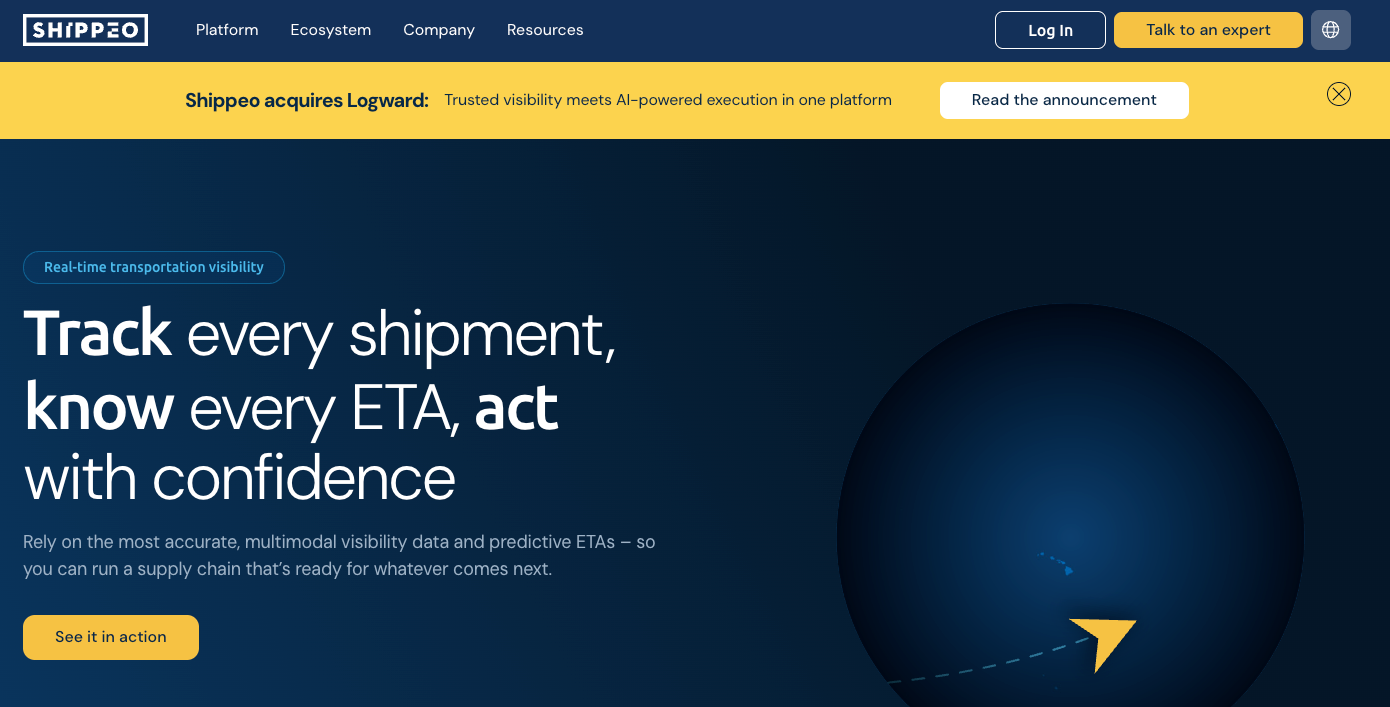
What does Shippeo do? - A real-time multimodal visibility platform built around the European market, integrating with more than 1,000 TMS, telematics, and ELD systems to deliver shipment tracking and machine-learning ETAs across modes in one portal.
Shippeo's Strengths - It pairs global visibility with a user-friendly design and strong support, and its network and ETAs are tuned to European carriers and lanes, which makes it especially reliable for shippers with European operations. It has deep roots in the automotive industry, where just-in-time supply chains make early delay warnings valuable, and it measures CO2 and GHG emissions alongside tracking.
Shippeo's Shortcomings - Its center of gravity is Europe, so coverage is strongest there and thinner elsewhere. As a visibility platform, it tracks shipments without planning, allocating, or invoicing them, so an operational system still sits underneath.
Shippeo's Pricing - Enterprise quote, per deployment.
Best for - European shippers, especially in automotive, that need strong regional multimodal visibility.
Descartes MacroPoint: best for North American truckload and brokers
What does Descartes MacroPoint do? - A freight visibility platform and carrier capacity network focused on real-time truckload tracking, connecting brokers, 3PLs, and shippers with carrier and telematics data, predictive ETAs, and detention reporting.
Descartes MacroPoint's Strengths - It's strong on truckload visibility and carrier coverage in North America, with driver-level tracking regardless of the carrier's ELD provider, and reviewers praise its ease of integration and fast implementation. It holds a 4.7 rating based on more than 800 G2 reviews and sits within Descartes' broader logistics suite, backed by a publicly traded company.
Descartes MacroPoint's Shortcomings - It's oriented to North American domestic trucking and the broker workflow, so it's a weaker fit for a European multimodal shipper. As with any visibility tool, it tracks freight without running the operation around it.
Descartes MacroPoint's Pricing - Quote-based, with monthly or annual options scaled to operations.
Best for - North American freight brokers, 3PLs, and shippers with significant domestic trucking.
Tive: best project44 alternative for high-value and sensitive freight
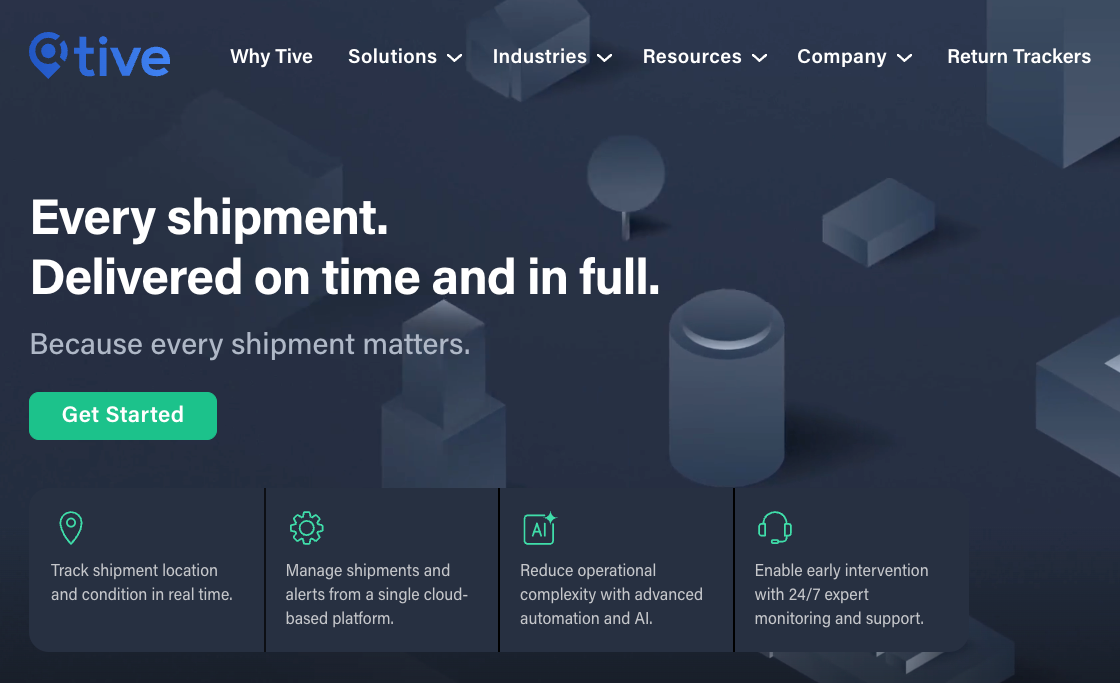
What does Tive do? - A visibility platform that pairs software with its own IoT sensor trackers to monitor shipment location and condition (temperature, shock, humidity) in real time, used by more than 600 shippers, logistics providers, and retailers.
Tive's Strengths - The sensor hardware is the differentiator, giving lane-level location plus condition data that matters for pharmaceuticals, food, and electronics where a temperature excursion or rough handling ruins the load. Trackers are reliable with long battery life, and APIs connect into TMS and visibility systems.
Tive's Shortcomings - The sensor model fits high-value or condition-sensitive freight rather than general tracking, and reviewers note it lacks some of the broader analytics depth of the largest platforms. It tracks shipments, so it doesn't run the operation.
Tive's Pricing - Quote-based, with hardware plus subscription.
Best for - Shippers moving high-value, perishable, or condition-sensitive goods that need IoT-level monitoring.
GoComet: best project44 alternative for mid-market visibility plus automation
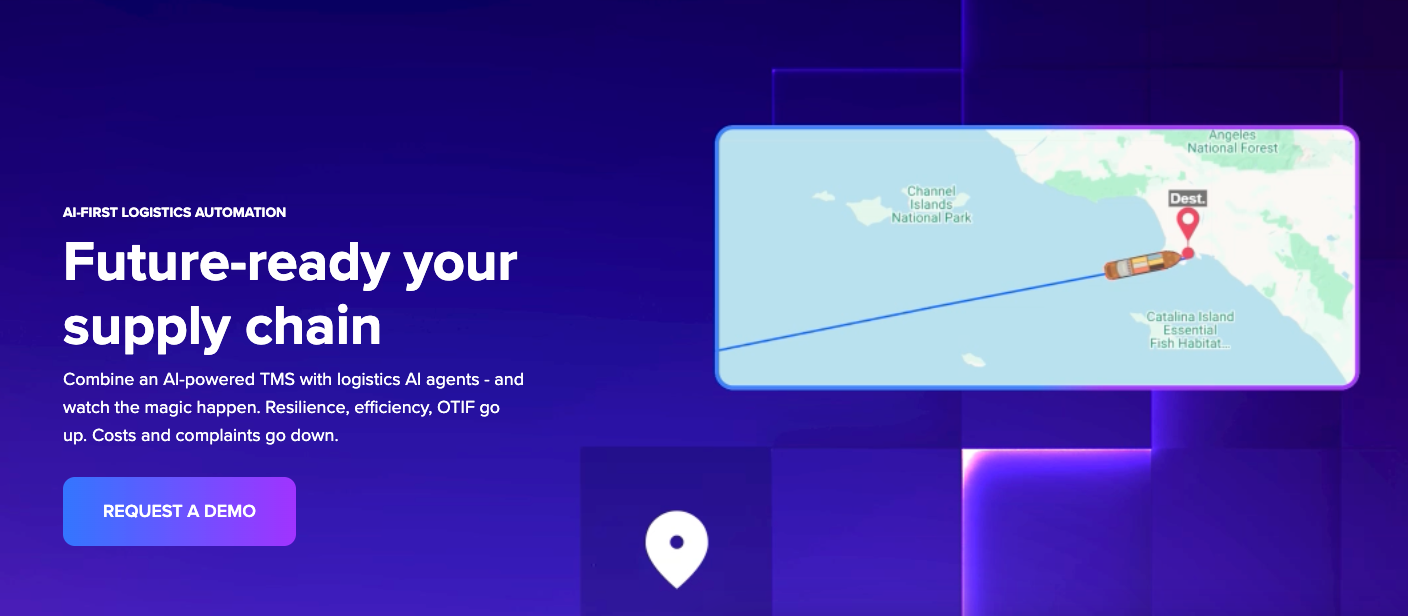
What does GoComet do? - An AI-powered transportation visibility platform that delivers real-time status and dynamic predictive ETAs across ocean, air, rail, and road, bundled with freight procurement, rate management, and spend analysis.
GoComet's Strengths - It combines visibility with broader freight process automation, which suits a mid-market team that wants tracking and freight workflow in one place. Reviewers highlight an intuitive, accessible interface that supports fast adoption, and it offers compelling value for the price, with strengths in freight audit and spend analytics.
GoComet's Shortcomings - It's positioned for mid-market rather than the largest global enterprises, and a buyer with strict requirements should verify enterprise-grade security certifications for their tier. It remains a visibility-and-freight tool rather than a full operational TMS.
GoComet's Pricing - Quote-based, positioned as mid-market value.
Best for - Mid-market teams that want visibility combined with freight automation at an accessible price.
How to choose the right project44 alternative for your use case
Start with whether you need visibility or an operation, then with your region and freight type.
- You're a mid-sized EU shipper still running transport on Excel and email, and you need the whole operation, not just tracking. Deliwell. Book a demo call.
- You need the deepest predictive analytics at global scale. FourKites.
- You're a European shipper, especially in automotive. Shippeo.
- You're a North American broker or shipper with domestic trucking. Descartes MacroPoint.
- You move high-value or condition-sensitive freight. Tive.
- You're mid-market and want visibility plus freight automation cheaply. GoComet.
Bottom line
- Project44 is a top-tier visibility platform, and most people searching for an alternative are looking for another visibility platform. The right one comes down to region, mode, and freight type: FourKites for predictive depth, Shippeo for Europe, Descartes MacroPoint for North American truckload, Tive for sensitive freight, and GoComet for mid-market value.
- Visibility platforms tell you where freight is. They don't plan it, allocate it, or invoice it, so an operational system still sits underneath.
- If you're a mid-sized shipper who bought visibility and found it surfaced problems without fixing them, the gap is usually the manual operation underneath, not the tracker. Unlike visibility-only tools, an operational TMS covers the full lifecycle from order to invoice, and for the EU and CEE mid-market, that's Deliwell, with native RO e-Transport compliance built in. It also coexists with project44, where a group already runs it. Book a free call.
FAQ
What is the best alternative to project44?
It depends on what you need. For a mid-sized shipper who needs to run the operation rather than only track it, the answer is a full TMS like Deliwell. For another visibility platform: FourKites for predictive analytics at scale, Shippeo for Europe, Descartes MacroPoint for North American truckload, Tive for sensitive freight, and GoComet for mid-market value.
Which project44 alternative is best for European shippers?
Among visibility platforms, Shippeo, which is built around the European market with a deep regional carrier network and strength in automotive. For a mid-sized EU shipper who needs the full operation rather than visibility alone, Deliwell is the better fit, with native Romanian compliance built in.
What's the difference between project44 and a TMS like Deliwell?
project44 is a visibility platform that tracks shipments and predicts ETAs on top of systems you already run. A TMS like Deliwell runs the transport operation itself, from order to invoice, including planning, allocation, documents, RO e-Transport compliance, and carrier invoice validation, with tracking included. They solve different problems and can run together.
Which project44 alternative is best for temperature-sensitive freight?
Tive, which combines software with IoT sensor trackers that monitor location and conditions like temperature and shock in real time, making it a strong fit for pharma, food, and electronics.
Case studies


Sonepar Romania centralises transport reporting and cost control with Deliwell



Inteva gains full transport visibility and eliminates manual work with Deliwell

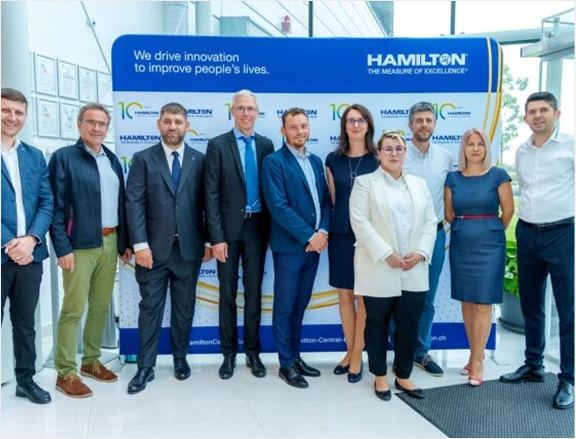

Hamilton Central Europe reduced transports costs by 28% by replacing their old TMS with Deliwell
